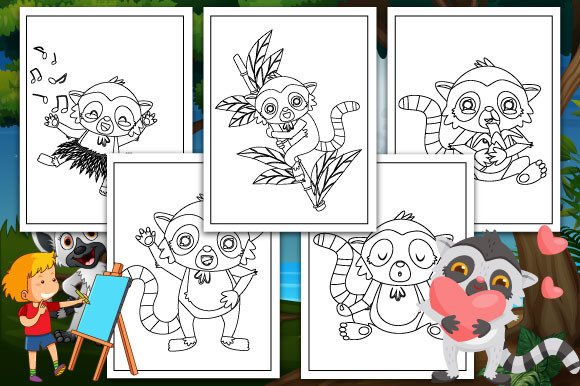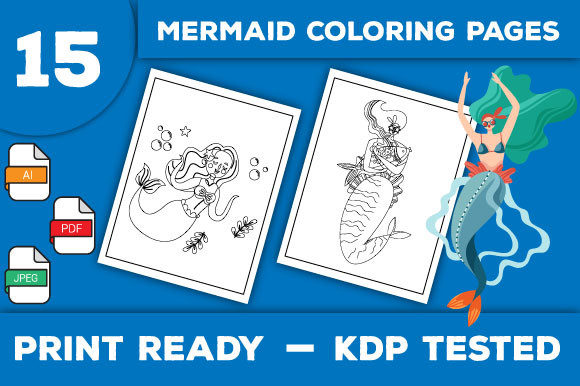
Mermaid Coloring Book Pages for Kids: A Designer's Review
As a designer who spends more time staring at stitch maps than most people care to admit, I approach every new machine embroidery design with a mix of curiosity and skepticism. When I first pulled up the files for Mermaid Coloring Book Pages for Kids, my initial reaction wasn't about the cuteness factor, though it is certainly there. Instead, my eyes went straight to the line weight, the density of the fills, and how those whimsical shapes would translate from a digital embroidery file to actual thread on fabric. This isn't just a graphic; it's a blueprint for a physical object, and that distinction changes everything.
The aesthetic here is distinctly "coloring book," which implies bold outlines and open spaces meant to be filled with color. In the world of embroidery, this usually translates to a combination of running stitch for the contours and fill stitch or satin stitch for the interior details. The mood is playful and nostalgic, evoking memories of crayons and summer afternoons. For a professional, the question becomes: does this nostalgia hold up under the tension of a hoop? My assessment is that this design shines when treated as a statement piece rather than a tiny accent.
Real-World Application: The Custom Tote Bag Scenario
To truly evaluate Mermaid Coloring Book Pages for Kids, I imagined a specific client request. A local boutique owner wanted a limited run of canvas tote bags for a summer beach collection. She needed something that appealed to children but looked sophisticated enough for parents to carry. This is where the design's potential really clicked.
On a sturdy cotton canvas tote, the bold lines of the mermaid motif stand out beautifully. The fabric texture of the canvas provides enough tooth to hold the stitches without sinking in, allowing the thread colors to pop. I visualized using a vibrant teal for the tail and a soft coral for the hair, keeping the outlines in a dark navy or black to mimic that classic coloring book feel. The result would be a handmade product that feels intentional and high-quality. Unlike a printed graphic that might crack or fade, an embroidered version adds tactile value that customers are willing to pay a premium for.
This same logic applies to sweatshirt embroidery. Imagine a cozy, oversized crewneck for a child. The design sits perfectly on the chest or even larger on the back. Because the style is inherently illustrative, it doesn't need to be hyper-realistic to work; the charm lies in the stylized simplicity. It transforms a basic garment into a personalized gift or a standout item in an Etsy seller's inventory.
Navigating Technical Challenges and Fabric Choices
However, enthusiasm must be tempered with technical reality. Not every surface is friendly to this type of design. If you are planning to use Mermaid Coloring Book Pages for Kids on stretchy knits like thin jersey t-shirts, you need to proceed with caution. The dense areas of the fill, if present, can cause the fabric to pucker if the stitch density is too high for the material weight. In these cases, a heavy-duty cut-away stabilizer is non-negotiable. You cannot skimp on support here, or your beautiful mermaid will look warped after the first wash.
Another consideration is the hoop size. These coloring book styles often rely on fine details to define scales, shells, or facial expressions. If you attempt to shrink this design down to fit a small cap or a baby sock, you risk losing those critical details. The running stitch outlines might become too close together, leading to thread breaks or a muddy appearance where individual stitches merge. For baby embroidery, I would recommend selecting the largest available size option to ensure clarity and comfort against sensitive skin.
Dark fabrics present their own set of challenges. While the design likely includes underlay stitches, placing light-colored fills over dark garments requires precise registration. If the design relies on the background fabric to show through as part of the "coloring" effect, it simply won't work on black or navy apparel without significant modification. Always test your digital embroidery file on a scrap piece of your intended fabric first. Check the contrast. Does the tail blend into the shirt? Do the eyes get lost? These are the questions that separate a professional finished product from a hobbyist mistake.
Commercial Viability and Brand Perception
For craft business owners and creative entrepreneurs, the visual appeal of this design directly impacts brand consistency and customer trust. A clean, well-digitized design signals professionalism. When a customer receives a pillow cover or an embroidered patch featuring Mermaid Coloring Book Pages for Kids, they are judging not just the image, but the execution. Are the corners sharp? Is the stitching uniform? These details build reputation.
This design is particularly strong for holiday embroidery projects, such as Easter baskets or summer camp gear. It also serves well as a printable mockup asset for digital sellers who want to showcase what their physical products could look like. The versatility allows it to fit into various niches, from nursery decor to boutique branding. However, before listing items for sale, you must verify the licensing terms provided by Coloring Pages Amp. Some files are for personal use only, while others allow for commercial application on physical goods. Ignoring this can lead to serious issues for a small shop product line.
Final Designer Notes for Success
If you decide to move forward with this project, treat it with the respect any professional embroidery project deserves. Here is a quick checklist to ensure success:
- Test First: Never run a production batch without stitching a sample on scrap fabric identical to your final material.
- Check Density: Inspect the stitch count relative to the size. If it feels too heavy, consider reducing the density in your software if you have editing capabilities.
- Thread Selection: Use high-quality rayon or polyester threads. The sheen can enhance the "colored-in" look, making the design feel more vibrant.
- Stabilizer Strategy: Match your stabilizer to your fabric. Woven fabrics might need tear-away, but knits almost always require cut-away.
- Lighting Matters: View your stitched sample in natural light to catch any shadowing or puckering that indoor lighting might hide.
In conclusion, Mermaid Coloring Book Pages for Kids offers a charming, versatile foundation for a variety of custom apparel and home decor items. It bridges the gap between whimsical illustration and tangible craft. With careful attention to fabric choice, stabilization, and sizing, it can become a staple in your library of design assets. Whether you are creating a one-of-a-kind gift or scaling up for a craft fair, this design has the personality to engage buyers and the structure to withstand the rigors of embroidery—if handled with a designer's eye.