Review: 3d Christmas Tree Toy Files for Cutting
As a designer who spends more time staring at stitch maps than actual holiday decorations, I approach every new machine embroidery design with a mix of excitement and skepticism. The market is flooded with seasonal assets, but few stand up to the rigors of real-world production. When I first pulled up the 3d Christmas Tree Toy. Files to Cut, my immediate reaction wasn't just about the festive theme; it was about the structural integrity of the digitizing. This isn't just a flat graphic; it's a piece of engineering intended to pop off the fabric, and that requires a different level of scrutiny than your average satin stitch monogram.
The First Impression: Dimension and Mood
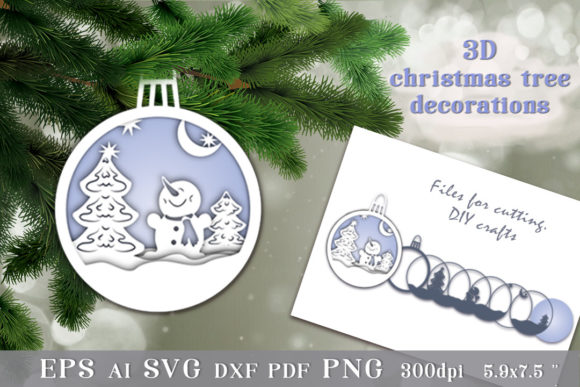
The visual personality of this embroidery file is undeniably charming. It captures that nostalgic, handcrafted feel of old-fashioned ornaments without looking dated. The layout suggests a playful yet sophisticated mood, perfect for elevating a standard holiday item into something boutique-worthy. What stands out immediately is the intention behind the "3d" aspect. In many digital files, dimensionality is an afterthought, achieved through sloppy layering. Here, the separation between layers feels deliberate. The design relies on a combination of dense fill stitch areas for body and precise running stitch or satin outlines to define the edges where the cut will happen. For a craft business owner, this distinction is vital because it dictates how the final product will behave in the customer's hands.
Real-World Application: The Holiday Tote Scenario
To truly evaluate the 3d Christmas Tree Toy. Files to Cut, I mentally placed it onto a specific project: a heavy-canvas tote bag intended for a high-end grocery store giveaway or a boutique holiday market stall. Imagine a cream-colored canvas bag. You aren't just stitching a tree; you are creating a tactile experience. When a customer runs their hand over the bag, they should feel the raised texture of the tree toy.
In this scenario, the design shines as a focal point. Unlike a flat applique design that might get lost against a busy background, the layered nature of this file commands attention. It transforms a simple tote bag design into a conversation starter. However, the success of this application hinges entirely on execution. If the cutting files are not perfectly aligned with the stitch-out, the 3D effect collapses into a messy fringe. For Etsy sellers and small shop product creators, this means the margin for error is slim. The design demands precision in both the stitching and the subsequent weeding or cutting process.
Versatility Across Products
Beyond tote bags, the potential for this digital embroidery file extends across various substrates. It would look exceptional on a thick fleece sweatshirt embroidery project, where the loft of the fabric complements the height of the design. For baby embroidery, such as on a holiday onesie or bib, the soft, rounded shapes of the tree toy are appropriate, provided the backing is secure enough to prevent irritation.
I can also see this working beautifully as a standalone embroidered patch. By stitching it out on twill and cutting around the perimeter using the provided cut files, you create a ready-to-apply asset for jackets or hats. This versatility makes it a strong candidate for commercial embroidery runs where a brand wants a unique holiday identifier without resorting to generic clipart. Whether used for personalized gift items like aprons and tea towels or as part of a larger holiday embroidery collection, the design holds its own visually.
Technical Considerations and Fabric Constraints
While the aesthetic appeal is high, we must discuss the technical realities. The "3d" element introduces complexity regarding stitch density and fabric compatibility. On thin or stretchy fabrics, a heavy, multi-layered design can cause puckering or distortion. If you are attempting this on a lightweight t-shirt, you must use a robust stabilizer—likely a cut-away rather than tear-away—to support the weight of the threads and the structural cuts.
Furthermore, curved surfaces like caps present a challenge. The rigid nature of a 3D-style cut design might not conform well to the front panel of a baseball cap unless the design size is significantly reduced. Small hoop sizes could also be a limiting factor if the design elements are spread out; you need to confirm the hoop size requirements before committing to a project. Additionally, dark fabrics require careful selection of thread colors. A traditional green-on-green might look muddy on navy blue, so high-contrast thread choices or metallic accents might be necessary to make the details pop.
Preserving Visual Clarity and Brand Value
The ultimate goal of any handmade product is to convey quality. A poorly executed 3D design looks like a mistake; a well-executed one looks like luxury. The 3d Christmas Tree Toy. Files to Cut has the potential to boost customer trust and brand consistency if handled correctly. The crispness of the cut edges directly impacts the perceived value of the finished product. Jagged cuts or loose threads undermine professionalism. For creative entrepreneurs, this design offers a chance to demonstrate superior craftsmanship, distinguishing their custom apparel from mass-produced alternatives.
Practical Notes for the Studio
Before rushing to stitch this out for a client, there are several critical steps to take. First, always test the design on scrap fabric that matches your final material. This allows you to check the thread color contrast and ensure the stitch density doesn't overwhelm the fabric weave. Second, inspect the small details in the cut files. Are the corners sharp? Is the path logical for your cutting tool?
It is also wise to view the design in black and white mockups to ensure the shape reads clearly without relying on color. Compare how it looks on light versus dark backgrounds to anticipate any visibility issues. Most importantly, verify the licensing terms. While many files allow for personal use, selling finished items or the design assets themselves often requires a commercial license. Never assume; always check the documentation provided with the download.
In conclusion, the 3d Christmas Tree Toy. Files to Cut is a compelling addition to a holiday library, offering a tactile dimension that flat designs lack. It bridges the gap between traditional embroidery and modern cut-file trends. However, it rewards preparation. For the embroidery project manager willing to test stabilizers, refine cutting paths, and select the right fabrics, this design can be the star of a successful seasonal collection. It is not just a file; it is an invitation to create something tangible and memorable for the holidays.